


-
 Soft Washing
-
 0 Comments
Soft Washing vs. Pressure Washing: Effective Mildew and Algae Removal for Chicago Homes
Why Lake Michigan Humidity Demands the Right Approach
Why Your Chicago Home Looks Stained Every Summer
Walk around your property on any humid summer morning in the Chicago area and you’ll likely spot them: dark streaks running down the north side of your home, greenish-black patches collecting along roof edges, or that unmistakable slimy film taking hold of your deck boards. These aren’t just cosmetic annoyances. They’re active colonies of mold, mildew, and algae that have found the perfect home on your exterior surfaces.
The Chicago region offers these organisms everything they need to thrive. Moisture from Lake Michigan drifts inland, settling into shaded corners and north-facing walls that never fully dry out between rain events. Add mature tree canopies common in Oak Park, Hinsdale, and La Grange, and you’ve created a microclimate where algae spores can germinate within days of settling. The same humidity that keeps lawns green all summer keeps siding damp enough for mildew to spread across fiber-cement panels and vinyl.
Many homeowners assume any form of exterior cleaning will solve the problem. They rent a machine, blast the surfaces with water, and watch the visible growth disappear. Two months later, the streaks return darker than before. That cycle of temporary fixes stems from a fundamental misunderstanding: not all cleaning methods address the biological root of the problem, and choosing the wrong approach for your specific surface type can cause permanent damage that exceeds the cost of the original cleaning by thousands of dollars.
Two Methods, Completely Different Tools and Outcomes
The terms get thrown around interchangeably at hardware stores and in online forums, but pressure washing and soft washing are fundamentally different processes designed for entirely different surface types. Using one where the other belongs doesn’t just produce mediocre results. It can strip paint, crack wood, dislodge roof granules, or force water behind siding panels where it causes hidden rot.
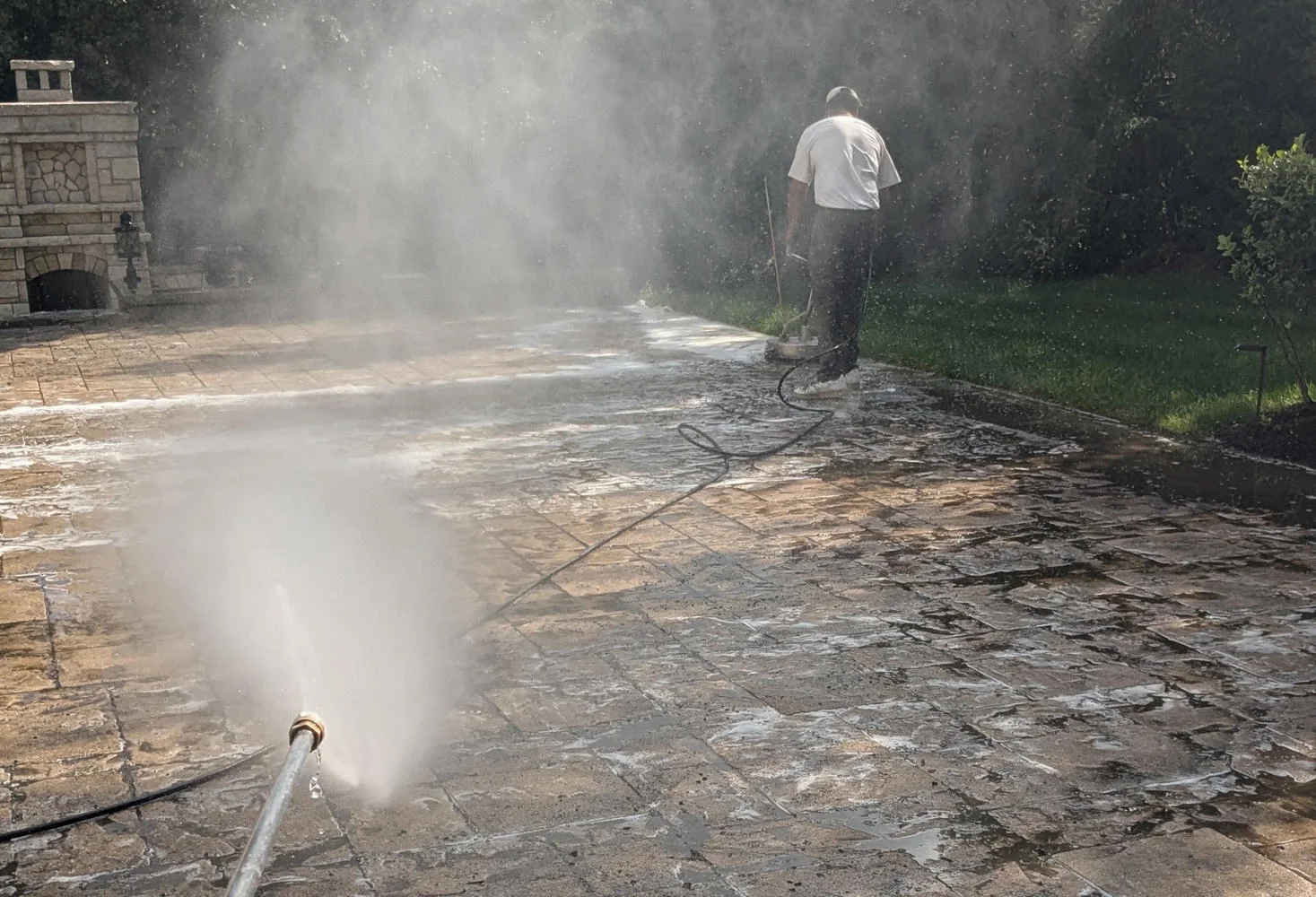
Pressure washing relies exclusively on mechanical force. Water exits the nozzle at 2,500 to 4,000 pounds per square inch, enough to remove years of caked-on dirt, oil stains, and embedded grime from concrete, brick, and stone. These surfaces can absorb that impact without damage because they’re non-porous or structurally dense. A power washing service excels on driveways, sidewalks, and patio pavers where you need brute force to restore the original surface color.
Soft washing operates on the opposite principle: chemistry does the heavy lifting, not pressure. The system applies biodegradable cleaning solutions at pressures below 500 PSI, closer to what comes out of a garden hose. These solutions penetrate mildew colonies and algae biofilm, breaking down the organisms at a cellular level. Within minutes, the growth begins to die off. A gentle rinse removes the residue, leaving surfaces clean without the risk of water intrusion or surface erosion. This method is the only safe choice for vinyl siding, painted wood, asphalt shingles, stucco, and any surface where high pressure would cause immediate or long-term harm.
The confusion arises because both methods use water and both remove visible dirt. But one treats the symptom while the other eliminates the cause. Homeowners in Burr Ridge and Orland Park often discover this difference only after hiring the wrong service and watching their gutters bend, shingles lose granules, or siding panels crack at the seams. An informed choice before the work begins saves both the surface and the wallet.
Why the Same Stains Keep Coming Back After Cleaning
Few things frustrate a homeowner more than spending a weekend cleaning exterior surfaces only to see the same dark streaks reappear before the first frost. That regrowth isn’t a sign of poor luck or unusually aggressive organisms. It’s proof that the original cleaning method never addressed the underlying biology.
When you pressure wash mildew or algae off siding, you’re essentially power-blasting the visible top layer while leaving the root structure and microscopic spores embedded in the surface texture. Algae, in particular, doesn’t just sit on top of asphalt shingles or vinyl. It sends filaments into the porous layers beneath, anchoring itself against wind and rain. High-pressure water may strip away the black or green discoloration, but those anchored spores regenerate the colony within weeks, especially during the humid stretches of June through September when Chicago-area dewpoints regularly climb into the 60s and 70s.
Mildew behaves similarly. The fuzzy, grayish growth you see in shaded corners isn’t just surface dirt. It’s an active fungal organism that reproduces by releasing airborne spores. Blasting it with water scatters those spores across adjacent surfaces, often spreading the problem rather than solving it. By the time you notice the regrowth, the new colonies have already matured and begun their own reproduction cycle.
Soft washing interrupts that cycle entirely. The cleaning solutions used in this process are formulated to penetrate biofilm, destroy the cellular structure of algae and mildew, and neutralize spores before they can regenerate. The result isn’t just a cleaner appearance. It’s a biologically treated surface that remains inhospitable to new growth for months, sometimes well into the following season. Homes in Hinsdale with mature oak trees and deep shade on the north side can go from needing cleanings twice a summer to once every 18 months, simply because the right method was used the first time.
This extended protection matters even more in neighborhoods near the lake, where morning fog and persistent humidity create a near-constant moisture layer on exterior walls. A home cleaned with high-pressure water alone will show streaks again by late summer. That same home treated with a proper soft wash can stay visibly clean well into the next calendar year, reducing both maintenance frequency and long-term costs.
Pairing the Right Method to Each Surface Type
The single most important decision in exterior cleaning isn’t which company to hire or what time of year to schedule the work. It’s knowing which method belongs on which surface. Get this pairing wrong and you risk damage that no amount of cleaning can reverse.
Vinyl siding, the most common exterior cladding in Chicago-area homes, should never be pressure washed at full force. The panels interlock with a thin lip that’s designed to shed water, not withstand it under extreme pressure. Aim a 3,000 PSI nozzle at that seam and you’ll drive water behind the siding, where it soaks into insulation and framing. Within months, you’ll notice interior staining, peeling paint, or a musty smell that signals hidden mold growth inside the wall cavity. Soft washing keeps water pressure low enough that the panels remain sealed while the cleaning solution does the work of removing mildew and algae.
Wood siding and fiber-cement boards face a different risk. High pressure doesn’t just clean these surfaces; it erodes them. Wood fibers break apart under sustained force, creating a rough, splintered texture that actually traps more dirt and moisture than before. Fiber-cement, while durable, can lose its factory finish when subjected to pressure washing, leaving a chalky residue and uneven coloration. Both materials benefit from the gentle, chemistry-based approach of soft washing, which cleans without compromising the substrate.
Roofing presents the highest-stakes decision. Asphalt shingles rely on a layer of ceramic granules bonded to the surface to reflect UV light and protect the underlying asphalt. Pressure washing dislodges those granules in sheets, accelerating wear and shortening the roof’s lifespan by years. A single aggressive cleaning can remove enough granules to void manufacturer warranties and trigger premature replacement. Soft washing removes algae stains without touching the granule layer, preserving both the roof’s appearance and its functional integrity.
Concrete, brick, and stone are the exceptions. These surfaces were built to handle impact, weight, and weather extremes. A residential power washing service can safely restore driveways, walkways, and patio pavers to their original color by removing oil stains, tire marks, and embedded soil that soft washing alone wouldn’t fully lift. The key is recognizing when force is appropriate and when it becomes destructive.
The costliest mistakes happen when homeowners treat all surfaces the same. A DIY pressure washing rental might clean a driveway beautifully, but that same machine aimed at siding or a roof creates repair bills that dwarf the original cleaning cost. Knowing the pairing before you start protects both your home and your budget.
How to Choose the Right Approach for Your Property
Concrete driveways, walkways, and brick patios were built to withstand heavy loads, freeze-thaw cycles, and direct exposure to the elements. These hardscapes benefit from the aggressive, high-pressure water stream that strips away embedded dirt, oil stains, tire marks, and organic buildup. A quality power wash on concrete can restore the original color and texture in a way that gentler methods simply cannot match. The porous nature of concrete and brick holds grime deep within the surface, which is exactly why the mechanical force of pressurized water works so effectively here.
In contrast, your home’s siding, whether vinyl, wood, or fiber-cement, was never designed to handle that same level of force. High-pressure water can infiltrate behind siding panels, allowing moisture to seep into wall cavities where it promotes rot, mold growth inside your walls, and structural deterioration you won’t notice until the damage becomes severe. On wood siding, pressure washing splinters fibers, lifts paint, and accelerates weathering. Vinyl siding can crack, warp, or pull loose from mounting clips under sustained high pressure. Fiber-cement, while durable, can still suffer surface erosion and paint failure when blasted repeatedly.
Roofing presents an even more critical case. Asphalt shingles rely on embedded granules to protect the underlying mat from UV degradation and weathering. A single pass with a pressure washer can strip years’ worth of granules off a roof, leaving the asphalt exposed and drastically shortening the lifespan of your entire roofing system. That’s why every major shingle manufacturer explicitly warns against pressure washing, and why soft washing has become the industry-recommended method for roof cleaning throughout the Chicago area.
Stucco, painted wood trim, and delicate decorative elements also fall firmly into the soft wash category. These surfaces require the chemical action of biodegradable cleaning agents to dissolve organic growth without risking the physical damage that high pressure invariably causes. The same principle applies to window screen cleaning and other delicate exterior components.
Getting this pairing wrong is one of the most common mistakes homeowners make when attempting DIY exterior cleaning or when hiring an inexperienced provider who applies one method to every surface. The result is often costly repair work that far exceeds what a proper cleaning would have cost in the first place.
